VT 2000-15
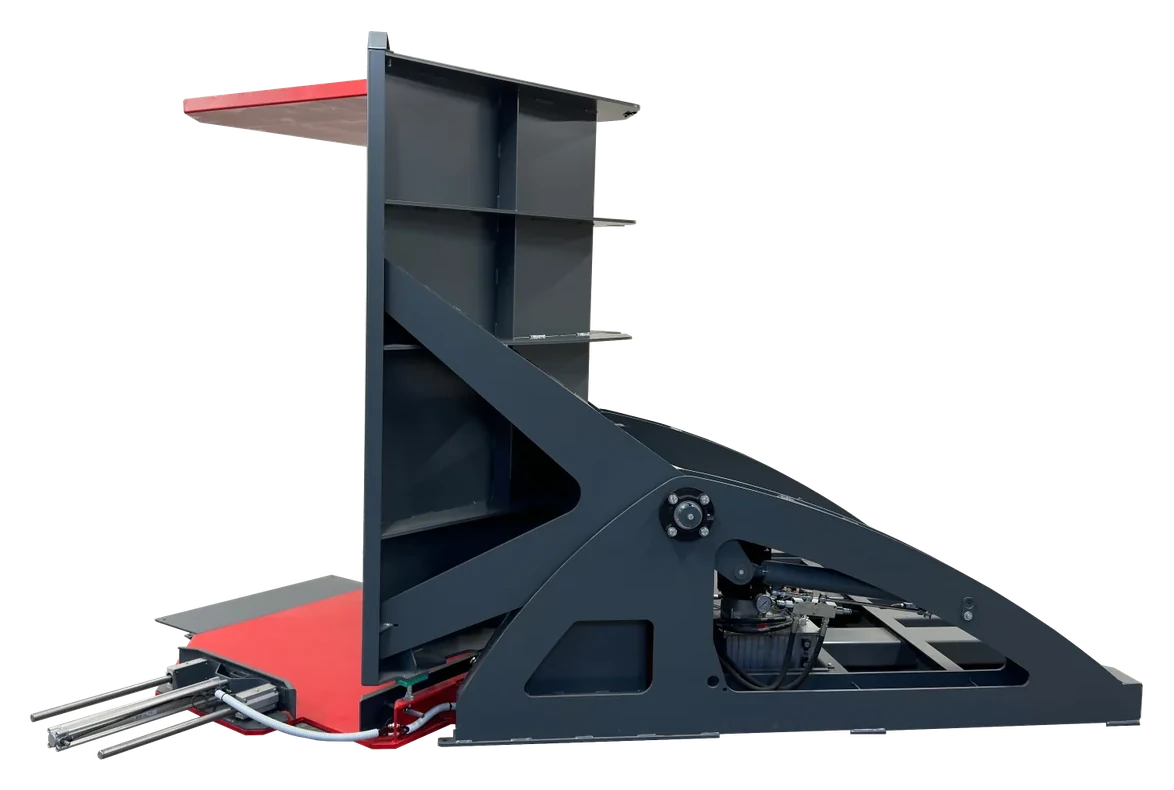
The standard model. It covers most layouts with EUR pallets (Euro pallets) and half pallets at normal stack height.
- Load height2,000 mm
- Capacity1,500 kg
- Tilt angle120°
- OperationManual · automatic · in-line

Sets the standard for pallet changing.
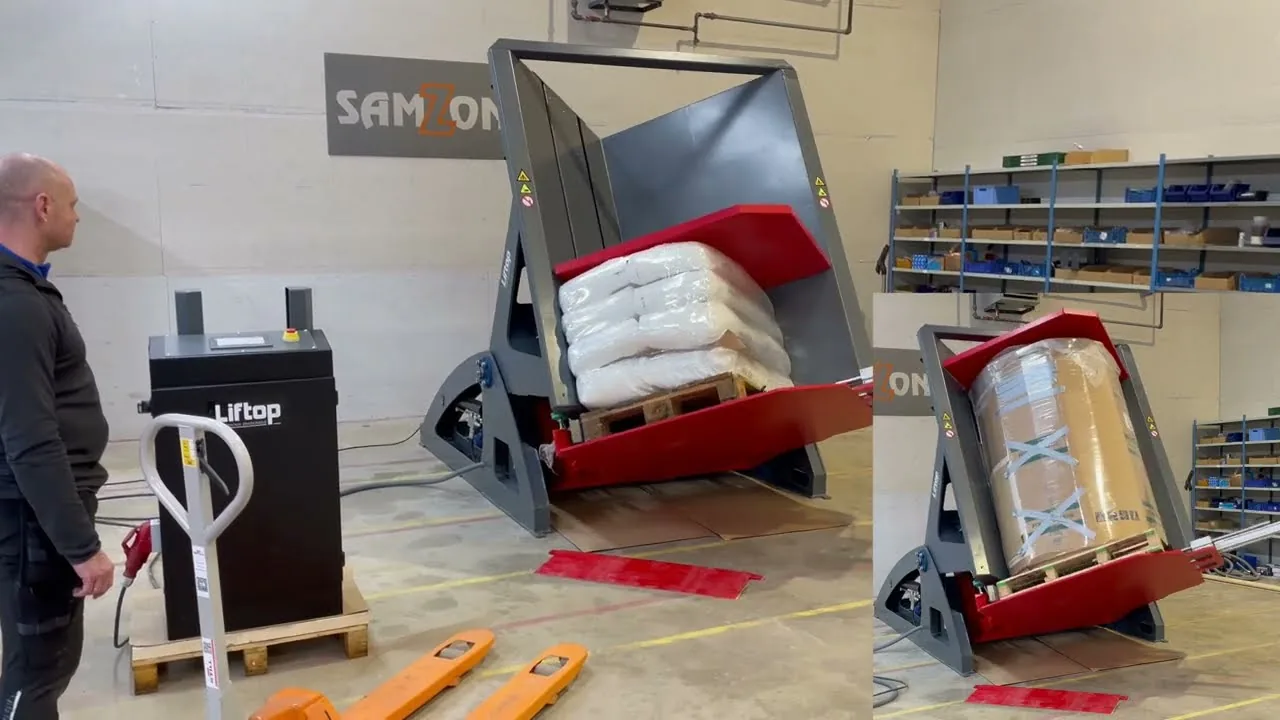
Changes the pallet under the load without anyone lifting. The product stands in exactly the same place on the new pallet as before — and never ends up upside down.
Manual work is limited to taking out the old pallet and putting in a new one. The machine does the rest at a single press.
The pallet and load are driven in with a pallet jack or forklift.
The machine tilts the product and pallet back 120°.
The old pallet is lowered to floor level, taken out and replaced.
The new pallet comes up under the load, and everything lowers back down.
No animation — this is the machine as it runs day to day.
Manual work is limited to taking out the old pallet and putting in a new one.
When manual pallet lifting comes out of the workflow, the risk drops noticeably.
The operator starts the machine on the control panel and can move on to other work in the meantime.
The difference is the load height. If neither of them fits your layout, we rebuild — we do that often.
The standard model. It covers most layouts with EUR pallets (Euro pallets) and half pallets at normal stack height.
For tall stacks. Same cycle and same capacity — just with room for 400 mm more load.
The pallet changer can be supplied with four levels of control. You can start out manually and add to it later — the base machine is the same.
Spec sheetScan or click
The operator controls each step with buttons on the control panel.
One press of start, and the machine runs the whole sequence on its own.
The machine also puts the new pallet in place on its own.
Built into the production line. Pallet handling runs entirely on its own.
The in-line solution is built largely around your layout. This is where we build the most custom solutions.
The machine is built around where it will stand and what it will run. These are the options customers most often add.
The operator presses start and the machine runs through the whole sequence by itself. That frees up time to handle pallets or other tasks while it runs.
Automatic operation requires guarding, so that no one can get under the machine while it runs — typically safety fencing or light curtains.
Often chosen for medical and food applications, where the product can come into contact with the machine. Also an advantage if the pallet changer has to stand in a damp environment.
Recommended if you have no compressed air already. We fit a small, low-noise compressor on the machine.
Lets the operator start the machine with a pull cord or an external button — for example while seated in the forklift.
Uses color to show whether the machine is running, has stopped, or needs service.
The most essential parts held in stock at your site, so a stoppage does not turn into waiting for a delivery.
On top of that comes the service agreement — planned visits, a fixed price and the same technician every time. See what it covers →
Tell us what you handle, how high you stack and how the pallet comes in. We'll get back to you with a recommended model and options.